#COMPASS2.0 ANIMATION PROJECT review: a battle anime that struggles to find its footing
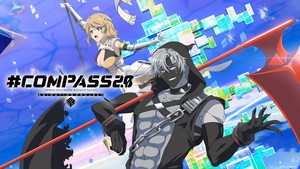
Promotional key art for #COMPASS2.0 ANIMATION PROJECT
Table of Contents
Quick synopsis: what is #COMPASS2.0 about?
#COMPASS2.0 ANIMATION PROJECT adapts the world of the popular multiplayer battle concept into an episodic anime where summoned “heroes” clash in 3v3 matches with the support of human partners. The series centers on 13, a hero close to being forced out of the system for lacking a partner, until a player named Jin joins forces with them. As alliances form, heroes begin acting unpredictably and violently, forcing the cast to investigate a mystery at the heart of their world.
Story and pacing: intriguing premise, uneven execution
The anime sets up a layered premise—part game, part parallel dimension, part social ecosystem—but it rarely commits to a single, coherent tone. The series teases a larger mythology about what #COMPASS actually is, flipping between “a game” and “another reality” in ways that make the rules feel unstable. That uncertainty could be an intentional way to build mystery, but in practice it leads to confusion rather than curiosity.
More problematic is the pacing. Scenes that should connect character beats and worldbuilding are frequently replaced with filler or thin connective tissue. Key moments that might provide emotional payoff are underdeveloped, which makes the overall narrative feel like a string of cool concepts without the necessary scaffolding to support them. For viewers who come in expecting a tight, plot-driven experience, this uneven structure is frustrating.
Characters and designs: flat personalities, forgettable aesthetics
Gacha-adjacent anime often succeed on the strength of character variety and striking designs—after all, the models need to be memorable for merchandising and in-game attraction. #COMPASS2.0 misses on both counts. Many characters are one-note, defined by a single trait without meaningful growth. Even the leads struggle to generate sympathy or intrigue because their motivations and backstories are skimmed over.
Visually, the hero designs rarely stand out. Rather than offering distinctive silhouettes or imaginative costuming, the cast feels like a lineup from a generic video-game character factory: competent but uninspired. That lack of visual identity weakens the show’s ability to sell its characters as icons viewers will want to follow beyond the anime.
Standout elements (few and far between)
- Occasional moments of genuine atmosphere: a well-directed short scene or an effective reveal can still land.
- Music highlights: the series benefits from strong theme songs—Nana Mizuki’s opening is a notable positive that adds energy even when other elements lag.
Action and animation: restrained fights where hype is needed
For an anime grounded in competitive battles, the fight choreography disappoints. Battles are often short, oddly restrained, and lacking the cinematic punch typical of successful action series. When heroes with legendary reputations enter a fight, viewers expect large, kinetic set pieces; instead they often get underbaked skirmishes that fail to deliver on the promise of spectacle.
Production quality overall is serviceable but uninspired. The animation rarely elevates weak writing, and the voice acting—while capable—doesn’t rescue the monotonous characterizations. In a medium where high-caliber action and memorable presentation can salvage weaker plots, #COMPASS2.0 doesn’t push either frontier far enough to compensate.
The adaptation problem: game origins vs. standalone storytelling
Adapting a multiplayer or gacha-style game into a coherent TV narrative is challenging. Many such adaptations are essentially extended showcases for characters and in-game mechanics, with plot taking a back seat. #COMPASS2.0 falls into that trap. It attempts to be accessible to newcomers by offering exposition, but the exposition is uneven and the deeper lore remains fragmented.
When an adaptation treats the anime as an accessory to the game rather than a self-contained story, the viewing experience suffers—especially for audiences unfamiliar with the source. Without strong, independent storytelling, the anime feels like promotional material first and meaningful entertainment second.
Who will enjoy #COMPASS2.0?
If you are a fan of the source game or enjoy collecting character designs and soundtrack moments more than cohesive plots, #COMPASS2.0 might have enough appealing fragments to keep you engaged. The opening themes and a few small character beats are enjoyable in isolation. However, viewers seeking tightly plotted action anime with strong character development are likely to come away disappointed.
Related listening
Fans who gravitate toward the series’ musical moments may want to follow the work of the opening artist—her discography is worth exploring for anime theme enthusiasts. For more about the artist, see this profile (external link, nofollow). Nana Mizuki — profile
Final thoughts
#COMPASS2.0 ANIMATION PROJECT has a promising premise and the occasional spark—principally in its music and short atmospheric beats—but those positives can’t cover for diffuse storytelling, bland character work, and underwhelming action sequences. The show ends up as a plain, uninspired package: neither outright bad in a sensational way nor particularly good at delivering the pleasures its concept promises. If you’re curious about the universe, there are glimpses worth sampling; if you want a consistently riveting battle anime, look elsewhere.