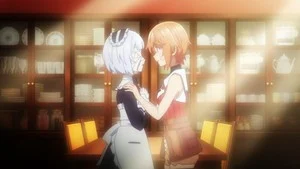
Episode 4 of Champignon Witch deepens the series’ melancholic core, spotlighting Luna’s enduring sorrow and the fractured morality of the witches around her. After two episodes that established her isolation and the staggering emotional cost of her powers, this installment pushes Luna into another crucible: the death of a friend and a chilling demand from the Fire Magician that threatens her only fragile sources of hope.
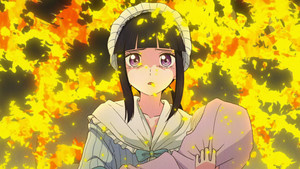
Table of Contents
Episode 4 recap: Loss, ghosts, and an impossible demand
Episode 4 opens with grief: the Cat Witch, one of Luna’s few comrades, has been killed in witch hunts, and her ghost returns to support Luna. This spectral presence underscores how isolated Luna has become — even in a world of witches, she struggles to belong. The Fire Magician, a figure of intimidating certainty and scorch-driven logic, insists that the young boy who represents Luna’s last hope must be killed to prevent a potential future threat. Luna, whose actions have consistently prioritized saving others even at personal cost, is pushed into direct conflict with a worldview that favors preventive destruction.
Character study: Luna’s sorrow and moral center
Luna has been framed from the beginning as both dangerous and deeply compassionate. Her past as a Cursed Youngling and her traumatic failed romance with Henri have left visible scars — not only emotional, but social. She sequesters herself largely out of fear that her power will hurt others. Episode 4 clarifies that Luna’s restraint is not weakness; it’s a moral choice. Rather than allow “the end of all things,” she chooses life, even when it means giving up personal longing or enduring scorn.
The cost of empathy
The episode highlights how empathy can be punished in an unforgiving community. While black witches perform essential purification work, they are stigmatized and marginalized. Luna’s consistent refusal to become judge and executioner marks her as different — and that difference becomes both a source of sorrow and a reason some witches, like the Fire Magician, view her as naïve.
The Fire Magician: ideology of burn-it-down justice
The Fire Magician embodies a singular, punitive logic: eliminate potential problems before they manifest. His willingness to demand a child’s death on the basis of possibility rather than act is chilling. Fire, as an element, symbolizes destruction and reformation through annihilation; here that archetype translates into a philosophy that prioritizes fear mitigation over mercy.
Short-sightedness and the consequences of power
His approach reveals a blind spot: he ignores Luna’s history, the sacrifices she’s already made, and her clear opposition to killing. This conflict raises a key question the episode explores — does a society that preemptively destroys threats become the very monster it claims to prevent? The Fire Magician’s rigidity isolates Luna further, making the social fabric among witches more toxic than protective.
Supporting characters and the fragile network of care
Despite the bleakness, the episode introduces small, meaningful counterpoints to the Fire Magician’s cruelty. Merino and Minos emerge as anchors; Claude’s arrival with the boy is an unexpected gift. The Water Witch and the Bird Magician provide glimpses of empathy and practical concern, showing that not all witches have adopted the scorched-earth reasoning. These relationships signal a possible path forward for Luna — a network, however tenuous, that can offer solace and hope.
The Cat Witch’s ghost and the burden of memory
The Cat Witch’s death and spectral return act as a poignant reminder of what Luna has already lost. Ghostly assistance functions narratively as both comfort and indictment: it comforts Luna in her loneliness but also highlights the scarcity of the living bonds she can rely upon. The presence of a ghost ally reinforces the central theme that in this world, support often comes at a cost.
Fairy-tale echoes and thematic resonance
Champignon Witch leans into classic fairy-tale motifs to heighten its moral messaging. The idea that societal neglect or cruelty can forge monsters echoes older tales — think of the maligned fairy or the ostracized figure who becomes dangerous out of desperation. The show reframes those tropes: Luna is not on a path to become monstrous; she actively resists it. Instead, the danger now comes from those who would pre-emptively punish potential wrongdoing.
These echoes serve two functions: they root the series in familiar moral folklore while allowing it to critique simplistic dichotomies of good and evil. The real menace in episode 4 is not fate or curse, but a community willing to sacrifice innocence for an illusory security.
Why this episode matters for the series
Episode 4 is pivotal because it solidifies the central conflict: Luna’s compassionate ethos versus a witching order increasingly inclined toward absolute control. This tension drives the narrative stakes higher and forces viewers to confront questions about moral responsibility, the cost of safety, and the ways communities ostracize those who don’t conform.
Moreover, this chapter reframes Luna’s resilience as active resistance rather than passive suffering. The boy’s continued presence and Claude’s support give her a chance at reclaiming joy — a crucial narrative beat after the heartbreak of Henri’s arc.
Where to watch
Champignon Witch is currently streaming on Crunchyroll.
For background on classic fairy-tale themes referenced here, see this overview of Sleeping Beauty variants: Britannica – Sleeping Beauty.
Final thoughts
Episode 4 of Champignon Witch deepens the series’ emotional and ethical complexity. Luna’s sorrow is a quietly powerful centerpiece, and the Fire Magician’s uncompromising logic poses a chilling counterpoint. The episode doesn’t just add another tragedy to Luna’s life — it forces a confrontation about what kind of world the witches are building. With fragile alliances forming around her and a renewed reason to protect life, Luna’s path forward feels less predetermined. This chapter leaves the series poised between despair and a cautious hope that compassion might yet prevail.