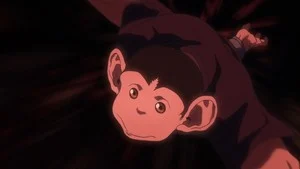
Champignon Witch episode 12 closes the season with a thoughtful meditation on love, power, and identity. Rather than ending on a conventional romantic climax, the finale leans into character and theme: Luna’s compassion, Lize’s quiet growth, and the series’ rejection of rigid categories for what makes someone “good” or “worthy.” This episode reframes the show’s magic system as a moral landscape, where the most powerful acts are driven not by selfish ambition but by care for others.

Table of Contents
Black vs. White Witches: Love as Power or Liability?
Episode 12 foregrounds a contradiction at the heart of Champignon Witch’s lore: black witches are said to be harmed by love, yet Luna—arguably the most influential black witch in the story—exhibits deep love in many forms. She cares for Henri, treats Lize and the familiars like family, and holds steadfast friendship with Dorothy. Despite this, Luna remains the world’s foremost healer against poison. That tension raises a core question the episode asks repeatedly: if love truly undermines black witches, how can they be the ones saving lives and helping people so selflessly?
The series uses this contradiction to challenge simple binaries. White magicians are described as “selfish” and energized by romantic love, while black magicians are labeled as emotionally impaired. But Luna’s actions reveal love as a motivating force that doesn’t fit into clean categories. The show problematizes assumptions about emotional life, asking viewers to reconsider what counts as love—and whose definition gets to dominate social judgments.
Luna: Compassion as Strength
Luna embodies the show’s counterargument: caring deeply is not a weakness. Her medicine to regrow limbs and her willingness to shelter Lize are acts driven by empathy, not power-tripping. Those selfless deeds reframe black magic as a form of service, rather than a corrupting influence. The episode insists that Luna’s identity should not be reduced to a label; she is more than “the Champignon Witch.”
Why Luna’s Kindness Matters
Much of the episode’s emotional impact comes from how others perceive Luna. Apart from Dorothy and Lize, most characters view her through a distorted lens shaped by prejudice. Gus and Claude try to understand her, but they fall short; Luna remains defined by rumor and stereotype in their eyes. Episode 12 asks us to empathize with someone who is repeatedly judged without being truly known—an experience that resonates beyond the fantasy setting.
Lize’s Growth: Perspective and Protection
Lize stands out as the observer-narrator whose journal frames the whole story. He sees Luna more clearly than most, recognizing her care rather than her label. Yet he also understands the world’s cruelty and chooses to keep certain truths private to protect her. This tension—between revealing the whole truth and safeguarding someone’s autonomy—gives Lize a quietly heroic quality.
Even as a youth (or in his teenage form), Lize demonstrates emotional intelligence: he recognizes the limits of how much the world will accept and decides to hold onto his own understanding without forcing it on others. That restraint is framed as maturity rather than cowardice. The finale implies that Lize’s choices will shape his future path, and that path may transcend the binary of black/white witchcraft entirely.
Grey Areas: The Bird Magician and Moral Complexity
The Bird Magician’s presence is an important reminder that not every character fits into the show’s defined boxes. He represents the possibility of a “grey” witch—someone who defies neat categories. Episode 12 hints that such hybridity is not only possible but healthy, and that acknowledging mixed identities can be a way forward for characters like Lize and for the world at large.
Fairy Tale Roots and Structural Choices
Champignon Witch borrows from and reinterprets fairy-tale tropes. The reviewer references tale types like The Robber Bridegroom (ATU 955), where protagonists often find agency and a new life without a romantic resolution. Similarly, Luna and Lize’s arc resists the expectation that a story must culminate in romantic union. Instead, the episode offers a quieter “happily ever after”: survival, continued care, and the freedom to define one’s own life.
For more on the referenced folktale type, see this entry on ATU 955 (no follow): The Robber Bridegroom (ATU 955).
Music, Tone, and Visual Storytelling
The episode’s opening and ending themes reinforce the show’s central idea that perspective matters. Visual motifs—Luna’s gentle expressions, Lize’s private journal pages, and the small domestic moments—underscore that the real magic is found in day-to-day care rather than grand declarations. Champignon Witch consistently invests in atmosphere: soft color palettes, close-up character work, and score choices that favor intimacy over bombast.
Representation and Subtext: Aromantic Readings
While the series never explicitly labels characters in modern terms, episode 12 encourages readings about different romantic orientations. The idea that love does not have to be romantic to be meaningful is central; it rejects the demeaning notion that people who do not experience romantic attraction are “missing out.” By showing a protagonist for whom platonic and familial love are central, the show broadens what narrative fulfillment can look like on-screen.
That thematic choice matters in a media landscape where romance often defines worth. Champignon Witch suggests alternative models of intimacy and purpose—models grounded in protection, healing, and mutual respect.
Where to Watch
Champignon Witch is currently streaming on Crunchyroll (no follow).
Final thoughts
Episode 12 of Champignon Witch finishes the season on a note that privileges care over cliché. It refuses to flatten characters into archetypes and instead celebrates complexity: Luna’s compassion, Lize’s protective silence, and the show’s insistence that love—in all its forms—can be a source of strength. The finale doesn’t wrap everything up with tidy romantic closure, and that’s precisely its point. This is a fairy tale about living honestly and kindly in a world that wants to simplify you, and it’s more rewarding for staying true to that message.