Table of Contents
A Gentle Noble’s Vacation Recommendation Review — Cozy Quest or Forgettable Fantasy?
Transported nobles, sleepy quests, and mismatched duos: A Gentle Noble’s Vacation Recommendation promises a light, whimsical take on the fantasy-adventure formula. The series follows Lizel, a duke mysteriously teleported to an unfamiliar kingdom, who adopts the life of an adventurer as part of a self-styled vacation. Paired with the stony mercenary Gil, the pair drift from quest to quest in a show that trades high stakes for a meandering, episodic charm. Below, we break down the anime’s strengths and weaknesses across story, characters, sound, and visuals to determine whether it’s worth adding to your watchlist.
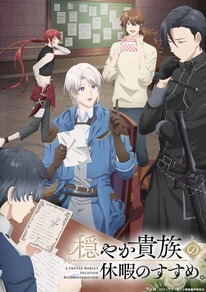
Lizel and Gil set out on what they call a vacation — but is it an adventure worth remembering?
Overview: Premise and Tone
The premise is simple: Lizel, a pampered duke displaced from his homeland, elects to become an adventurer in a foreign kingdom. This setup creates an intentionally carefree tone — the series leans into the idea of an aristocrat treating dangerous quests like holiday excursions. That whimsical promise is attractive, but the show’s execution oscillates between cozy idleness and aimless padding. Rather than a tightly woven plot, episodes often read like a travel log: scene after scene stitched together without a compelling throughline.
Characters & Chemistry
Lizel — The Smiling Noble
Lizel’s primary characteristic is his aristocratic composure and perpetual grin. He speaks in a refined register, and his outward confidence is meant to be charming. Yet the series rarely gives him deeper layers beyond his attire and mannerisms, which makes emotional investment difficult.
Gil — The Stoic Bodyguard
As Lizel’s hired sword, Gil is the polar opposite: silent, armored, and practical. While that contrast can be fertile ground for character chemistry, the show doesn’t develop the duo’s relationship beyond superficial beats. The expected banter and growth that would give their partnership warmth are mostly absent, making their journey feel perfunctory rather than intimate.
Supporting Cast — Missed Opportunities
Side characters arrive with intriguing hooks — notably Eleven, a serpent-like bandit whose motives push the story into darker, more suspenseful territory. Unfortunately, the series flip-flops on consequences and character accountability, sometimes excusing grave offenses for the sake of convenience. These inconsistencies reduce narrative stakes and undercut character development.
Story & Pacing
The episodic structure mimics a vacation log: short arcs, local problems, and temporary resolutions. While that format can work for lighthearted fantasy, here it often reads as laziness rather than design. Conflict resolution is frequently abrupt; fights end off-screen or get fast-forwarded, and plot threads are sometimes dropped or reversed without justification. If you enjoy relaxed, slice-of-life fantasy detours, the pace might feel soothing. If you prefer coherent arcs and satisfying payoffs, this show will frustrate.
Music & Sound Design
Where the series earns consistent praise is its soundtrack. The composer brings a polished orchestral palette — playful woodwinds, evocative strings, and tasteful violin solos — that complements the anime’s whimsical moments. Music helps salvage several scenes that otherwise lack narrative weight, adding warmth or tension where the script does not. Fans of characterful fantasy scores will find the audio work to be one of the series’ best assets. For more on the composer’s broader catalog, see this profile. Kousuke Yamashita — composer
Visuals & Animation
Visually, the anime offers competent but unremarkable designs. Backgrounds and character models fall squarely into familiar fantasy-anime territory — pretty, predictable, and safe. More problematic are the animation shortcuts: static frames with zooms, jittery simulated motion, and cut-away resolutions to bypass full action sequences. These techniques sometimes produce unintended comedy instead of tension, which clashes with the show’s intended tone.
What Works and What Doesn’t
- Works: Gentle, whimsical score; pleasant fantasy atmosphere; episodic variety for casual viewing.
- Doesn’t work: Thin character development; inconsistent internal logic about Lizel’s noble status; rushed or missing action sequences; uneven consequences for serious actions.
Genre Context
As a light fantasy series that leans into travelogue vibes, this show sits comfortably within the broader tradition of isekai/transported-protagonist stories, but it doesn’t fully commit to either the character-driven introspection or the high-adventure spectacle seen in stronger entries. If you’re exploring fantasy anime that focus on mood over momentum, you might appreciate it for its leisurely beats. For viewers seeking cohesive plotting and deep character arcs, it’s likely to come off as filler in an already crowded genre. For a primer on the transported-world trope, see this overview. Isekai — transported-world overview
Final thoughts
A Gentle Noble’s Vacation Recommendation delivers a cozy concept with uneven follow-through. The series’ strengths — a charming orchestral score and a relaxed, travelogue tone — are undermined by thin characterization, inconsistent plot choices, and frequent animation shortcuts. Treat it as a casual, low-stakes watch: the anime can be pleasant background viewing when you want light fantasy without commitment, but it rarely lingers in the memory. If you value narrative cohesion and character growth, this one may not make your must-watch list.