Episode 9 of Agents of the Four Seasons: Dance of Spring continues the series’ glacial march through trauma and atmosphere, doubling down on long, melancholic stretches and repeated flashbacks. If you’ve followed this show week to week, you know exactly what to expect: lush visuals, a finger-wringing focus on past wounds, and characters who seem to circle the same emotional campfire without ever stepping forward. This review breaks down what works, what flatlines, and why Episode 9 may leave both patient fans and casual viewers exasperated.
Table of Contents
Episode 9 recap: what actually happens
On paper, Episode 9 finally gathers the scattered agents — Spring, Summer, Autumn, and Winter — and sets them on a single, concrete objective: rescue Nadeshiko. In practice, the episode continues the series’ pattern of spending more time on mood than movement. We get repeated flashbacks to Sakura’s feverish search for her missing friend, intercut with Hinagiku’s fragile attempts to carry out the ritual that will restore Spring. Meanwhile, Winter and Autumn linger on the sidelines, their arcs barely advanced beyond a handful of quiet, guilt-laden moments.
Pacing and structure: deliberate or stalled?
The core complaint many viewers will have about Episode 9 is pacing. The series favors long, reverent beats — close-ups of faces, echoing lines of dialogue, and slow, painterly transitions — over forward momentum. When spacing and atmosphere serve character insight, the approach can be captivating. When they replace actual progression for multiple episodes straight, it feels indulgent.
One could argue the show aims to be meditative, letting trauma and memory unfold in real time. But by the ninth episode, those meditative choices start to read less like artistic intent and more like an unwillingness to commit to plot. Episodes that might have been condensed into tighter arcs instead recycle the same emotional exposition until it loses potency.
Character focus: missed opportunities and uneven balance
The show’s greatest weakness remains its distribution of attention. Sakura and Hinagiku — the emotional center — continue to dominate screen time, yet new revelations or meaningful growth rarely arrive. Rosei (Winter) is present in many scenes, but his function feels tethered to exposition-heavy flashbacks rather than meaningful development in the present. Rindo (Summer) and the Guardian of Autumn get quick, intense beats — like Autumn’s traumatic abduction — that are resolved far too fast to feel earned.
When crucial emotional beats are either dwelled on endlessly or dispatched in a single episode, the series struggles to generate believable momentum. The result: characters who feel defined more by their backstories than by how they act now, leaving the present-tense narrative thin and repetitive.
Repeating the past: storytelling by echo
Episode 9 leans on a strategy of re-presentation: show the same moments again with slight variation, expect new emotional resonance. That technique can work if each revisit reveals new subtext or pushes the characters into different choices. Here, however, the revisitations mostly restate facts we already understand — guilt, loss, and confusion — without transforming them into new stakes.
Visuals and production: gorgeous but hollow?
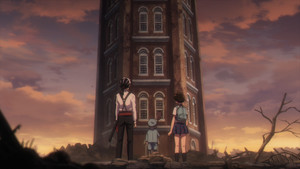
It’s hard to deny the series’ beauty. The animation and composition routinely deliver striking frames: rain-soaked cityscapes, ethereal rituals, and expressive facial animation. Fans are right to praise the aesthetic — many scenes are Instagram-ready, and the show’s palette and cinematography are consistently evocative.
But there’s a trade-off. The production gloss occasionally masks narrative shortfalls: pretty shots can’t replace character agency or coherent plotting. Episodes that coast on visual allure risk alienating viewers who crave meaningful forward motion beneath the surface sheen.
Where the series stalls: narrative consequences
Because Episodes 1–9 allocate their most significant revelations to flashbacks and defer decisive action, the narrative stakes in the present remain low. The imminent rescue of Autumn’s child (Nadeshiko) is teased, but the delay in seeing the plan executed defangs the emotional payoff. When a series keeps promising the next big movement without delivering it, the audience’s trust erodes.
Compounding the problem is inconsistency in urgency: some characters behave as if the situation is urgent, while the storytelling allows room for repeated rumination. That mismatch leaves episodes feeling like they’re promising a crescendo but spending their runtime tuning the same notes.
What Episode 9 does well
- Reinforces the show’s melancholic tone with thoughtful framing and excellent score work.
- Provides a clearer group objective for the first time in several episodes: the rescue of Nadeshiko.
- Delivers standout visual moments that highlight the series’ production strengths.
Where it falters
- Pacing remains the central issue: plot movement is repeatedly postponed in favor of repeated exposition.
- Supporting characters like Rosei and Autumn lack consistent, satisfying arcs; important beats arrive either too late or too quickly.
- The emotional repetition lessens impact — familiar scenes are revisited without meaningful recontextualization.
Agents of the Four Seasons: Dance of Spring is currently streaming on Crunchyroll, where viewers can judge whether the show’s atmosphere compensates for its slowness.
Final thoughts
Episode 9 is emblematic of the series’ biggest tension: gorgeous craftsmanship fighting against a tendency to stall. If you watch for mood, visuals, and moments of raw feeling, the episode will offer rewards. If you watch for steady narrative progression and balanced character work, you’re likely to feel frustrated. The rescue plot that finally unites the cast hints at potential momentum ahead, but whether the show can convert its visual promise into sustained storytelling remains to be seen. For now, Agents of the Four Seasons is a beautiful, sometimes maddening exercise in style overshadowing substance.