Episode 8 of MAO pushes the series further into the murky border between folklore, history, and personal memory. Rumiko Takahashi continues to weave supernatural mystery into a historical tapestry—this time using the fallout from the Great Kanto Earthquake and the long shadow of a thousand years to complicate the plot. The episode offers intriguing revelations about MAO’s past and introduces other surviving disciples of his former master, but it also exposes how difficult it can be to handle genuinely vast spans of time in a satisfying, believable way.
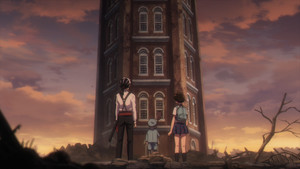
Table of Contents
Episode 8 — Quick recap
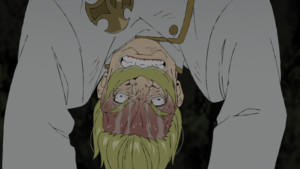
This installment ties together present events with buried history. We learn more about the Asakusa Tower’s fate after the Great Kanto Earthquake—not exactly “destroyed” in one instant, but so damaged it had to be demolished afterward. The episode also reveals that MAO isn’t the only survivor connected to his old master: other human disciples from his earlier life are still wandering the world. One of them, an unsettling circus performer with flaming head imagery, resurfaces and hints at a different version of the past—calling into question MAO’s memory and history as well as the motives of the Byoki.
Using history as story fuel
The Asakusa Tower and historical texture
It’s refreshing to see Takahashi actually lean into the historical setting in MAO. Where some of her earlier works used history mainly as a backdrop, Episode 8 treats a real disaster—the Great Kanto Earthquake—as a narrative catalyst. By presenting the Asakusa Tower as a building that survived the quake only to be demolished later due to structural damage, the show avoids a simplistic “destroyed-or-not” framing and instead uses nuance to enrich the setting.
If you’re interested in the real-world event the episode references, background reading can help illuminate how the earthquake reshaped Tokyo and its cultural landmarks—see this overview for context: Great Kanto Earthquake (Britannica).
The thousand-year problem: story implications and plausibility
One of the episode’s central conceits is the “once in a thousand years” recurrence of certain supernatural events. That kind of timescale is dramatic—almost mythic—but it carries narrative responsibilities. If characters have literally been alive and active for a millennium, their absence, knowledge, or ignorance must feel plausible within the story world. Episode 8 introduces other disciples who allegedly knew MAO when he was human, yet they apparently did not interact with or track his fate over an entire millennium. That raises logical questions.
Why a thousand years is tricky
- Scope: A thousand years spans innumerable social, political, and technological changes. Suggesting multiple people survived or wandered through that span without any trace strains credibility unless the worldbuilding addresses how they avoided notice.
- Memory and record-keeping: If these disciples were present in Japan over centuries, why would there be no historical record or rumor? If they were elsewhere, what factors kept them separated?
- Narrative choices: Saying something happens “once in a thousand years” is a powerful hook—but once you lean into the literal meaning, the work has to reckon with consequences beyond the immediate plot twist.
In short, the show gains drama from the millennium angle, but it also invites skepticism. The emotional weight of “a thousand years” requires more explicit scaffolding to feel fully earned.
Characters and new revelations
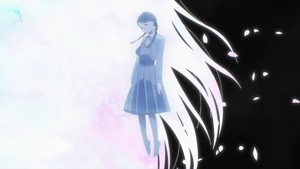
The most intriguing personnel development is the appearance of MAO’s fellow disciples. These characters inject shades of ambiguity—their accounts of the past conflict with MAO’s own history and with what the Byoki hinted at earlier. That classic Takahashi tactic—introducing alternate versions of events that force viewers to rethink what they assumed—is on full display here.
Standout moments
- The circus-linked disciple with the flaming head: a memorable design that raises immediate questions about identity, performance, and ritual survival.
- The continued ambiguity around MAO’s transformation: the episode avoids tidy explanation, keeping emotional and moral stakes murky.
- Historical echoes: using the earthquake and a demolished landmark gives the episode a tangible sense of time and grief that complements the supernatural elements.
What works and what falls short
Strengths:
- Atmosphere: The show excels at blending period detail and supernatural dread, creating strong visual and tonal moments.
- Character mystery: New figures complicate MAO’s backstory in provocative ways, keeping viewers emotionally invested.
- Historical grounding: Mentioning real events like the Great Kanto Earthquake demonstrates a willingness to make the setting matter.
Weaknesses:
- Plausibility gaps: The thousand-year premise strains credulity without further explanation of why other long-lived figures wouldn’t intersect sooner.
- Pacing of revelations: Introducing multiple alternate perspectives in a single episode risks fragmenting the narrative unless later episodes consolidate the threads.
Where to watch
MAO is currently available on streaming platforms—if you want to catch up or rewatch key scenes for deeper context, it’s accessible on Hulu: MAO on Hulu.
Final thoughts
Episode 8 of MAO is a solid entry that balances eerie charm with narrative stakes. Rumiko Takahashi is clearly more interested in leveraging historical texture this time around, and that willingness to engage with the past makes the show more compelling than some of her previous, more static historical backdrops. However, invoking enormous spans of time—like the “thousand-year” motif—requires more careful thought about continuity and plausibility. The new disciples and the revised history they present are intriguing hooks, and if the series follows through on reconciling these contradictions, MAO has the potential to deepen into a genuinely resonant supernatural mystery. For now, Episode 8 leaves us curious, sometimes skeptical, but eager for the next piece of the puzzle.