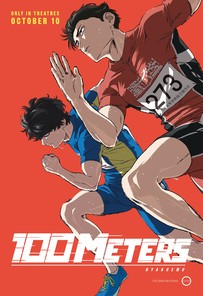
100 Meters — poster
100 Meters is a quietly powerful sports drama that follows two sprinters from childhood to the professional track, asking the simple but profound question: why do you run? Directed by Kenji Iwaisawa and adapted from Uoto’s five-volume manga, the film blends rotoscoped realism with anime stylization to produce visceral race sequences and intimate character moments. Screened at the Scotland Loves Anime film festival on November 1, 2025, this movie is a must-watch for fans of character-driven sports stories and distinctive animation techniques.
Table of Contents
Visual Style: Rotoscoping That Feels Alive
One of the first things viewers will notice is the film’s commitment to a rotoscoped aesthetic. Iwaisawa, who previously worked on rotoscoped projects, elevates the technique with a professional team to avoid the uncanny valley that sometimes plagues frame-by-frame animation. Instead, movement feels weighted and muscular—every stride, stumble, and surge forward conveys physical consequence. The result is an athletic realism that makes sprinting scenes genuinely thrilling.
Painted Backgrounds and Cinematic Composition
Backgrounds often resemble oil paintings: rich, textured, and almost photorealistic. Certain slow-motion sequences adopt a pastel, dreamlike palette while some transitions cleverly compress time during a run, heightening tension and emotion. One sequence—a rain-drenched final shot rendered as a single long take painted over live-action footage—stands out as a technical and emotional triumph, showcasing both painstaking craft and cinematic ambition.
Characters: Rivalry, Identity, and Inner Conflict
At the heart of 100 Meters are Togashi and Komiya, whose rivalry and friendship propel the narrative. Togashi is quietly intense, early fame weighing on him as injuries and doubt threaten his future. Komiya, brooding and socially awkward, wrestles with anxieties that complicate his path. Supporting characters like the sardonic Zaitsu and the imposing Kaido add texture—Zaitsu’s nihilistic pep talk unexpectedly jolts Komiya toward growth, while Kaido’s gravel-voiced presence (brought to life by veteran seiyū Kenjirō Tsuda) adds a charismatic contrast to the younger runners.
Performance and Voice Work
Voice performances ground the characters’ emotional arcs. The delivery is naturalistic, avoiding melodrama while allowing moments of raw vulnerability to land. Kaido’s low-key, drawling lines provide both comic relief and depth, making him one of the film’s most memorable presences despite appearing later in the story.
Thematic Core: Why Do You Run?
100 Meters is less interested in tallying medals than in probing motivation. For each athlete, sprinting represents a different need—escape, identity, validation, or simply the joy of movement. As the film progresses, it reveals how losing sight of that core reason can be harmful. The movie argues persuasively that the worth of an athlete’s effort lies not solely in victory but in the commitment to give everything they have.
Rivalry vs. Self-Competition
The rivalry theme is handled with nuance: opponents are mirrors rather than mere obstacles. The film suggests growth comes from confronting one’s own limits. Rather than endorsing a win-at-all-costs ethos, it celebrates integrity and wholehearted labor—values that resonate beyond sport.
Pacing and Adaptation: Fitting Five Volumes into One Film
Adapting five manga volumes into a single feature is no small feat, and occasionally the film’s temporal leaps make it hard to track characters across years. Some viewers may find themselves momentarily unsure who’s on screen during quick transitions. Still, the editing keeps the emotional through-line intact, and the most crucial beats—training, injury, and championship pressure—receive thoughtful treatment.
Soundtrack and Emotional Momentum
The soundtrack bolsters the film’s energy, combining urgent motifs with quieter, introspective cues. The ending theme, “Rashisa” by Official HiGE DANdism, complements the film’s tone with upbeat urgency and emotional closure. (Official HiGE DANdism site.)
Standout Scenes
Beyond the rain-drenched long take, several short sequences linger: early tutoring moments where Togashi gently coaches Komiya, Togashi’s public breakdown that strips away the athlete’s stoicism, and a climactic stretch in which runners transcend ordinary limits for a breathless instant. These punctuate the narrative with highs and lows that feel earned rather than contrived.
Emotional Realism Over Spectacle
Unlike some sports films that prioritize flashy victories, 100 Meters focuses on the internal cost of competition: the injuries, the loneliness of practice, and the small kindnesses that sustain athletes. This grounding gives the film emotional heft even when it eschews tidy resolutions.
Where to Watch and Festival Screenings
The film made festival rounds in 2025 and will likely appear at additional screenings and international festivals. It had an early showing at Scotland Loves Anime on November 1, 2025 — a spot that introduced the movie to an engaged audience of genre fans and critics.
Final thoughts
100 Meters is a moving, meticulously crafted sports film that pairs innovative visual technique with intimate character work. Kenji Iwaisawa’s use of rotoscoping and painted environments delivers the physical poetry of sprinting, while the screenplay’s insistence on motive over medal gives the story moral and emotional depth. Fans of sports anime, character-driven dramas, or daring animation experiments will find much to admire here. If you care about how and why people give their absolute all, this film will stay with you long after the last finish line fades into the rain.