Yes! Precure 5’s second half deepens the emotional stakes while sharpening the series’ central theme: strength through teamwork. As the Cures press their fight against Nightmare toward its climax, the looming separation of Coco, Natts, and Milk from the human world creates a bittersweet undertone that amplifies every victory and setback. This stretch of episodes balances character growth, evocative group choreography, and a thematic focus on hope versus despair—making it essential viewing for anyone who appreciates character-driven magical girl storytelling.
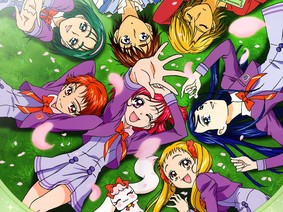
Yes! Precure 5 — the latter half accentuates teamwork, growth, and the pain of potential goodbyes.
Table of Contents
Teamwork as the Heart of the Series
The second half of Yes! Precure 5 crystallizes its message: the girls are more powerful together than apart. While there are clear sub-pairs—Nozomi and Rin, Karen and Komachi, Coco and Natts—the series resists isolating teams into rigid duos. Instead it constantly mixes interactions so each heroine must learn how to support and adapt to the others. This interweaving of personalities becomes most literal and spectacular in the group attack Five Explosion, which evolves from Cure Dream’s Crystal Shoot and visually underscores the idea that combined strengths eclipse solo efforts.
Five Explosion and Visual Storytelling
Five Explosion isn’t just fireworks; it’s the narrative shorthand for the girls’ unity. The composition (including Milk’s surprising integration) visually and thematically ties everyone together, showing that individual growth feeds into collective power. That choreography—both in animation and in concept—sells why the Cures are worth rooting for: their bonds produce results.
Character Arcs: Growth, Rivalry, and Redemption
Character work in these episodes leans into emotional realism. Milk’s arc is particularly notable: she’s loud, self-centered, and often cruel in her attempts to protect Coco and Natts, but her abrasiveness hides loyalty and fear of abandonment. Her rivalry with Nozomi adds friction that ultimately strengthens their dynamic, as both are forced to confront insecurity and trust.
Natts, Guilt, and the Weight of History
Natts’ guilt about the Palmier Kingdom’s fate demonstrates how the show treats psychological wounds. Rather than reducing remorse to a plot device, the series examines how withdrawal and self-blame can metastasize—especially when Nightmare’s black masks actively prey on negative emotions. Natts’ struggles show how easy it is to slip toward despair and how vital friends are in pulling someone back.
Urara and Komachi: Insecurity and Self-Worth
Urara and Komachi present alternative responses to self-doubt. Urara juggles a public idol image with a more vulnerable private self; Komachi must expand from a comfort zone into group dynamics. Their journeys highlight that confidence isn’t a switch to flip but a path paved through supportive relationships and small victories.
Villains, Despair, and the Power of Hope
Nightmare’s tools—especially the white and black masks—are an effective metaphor for despair’s corrosive nature. Black masks burrow into psyches and amplify existing weaknesses, making each confrontation feel personal. Bunbee’s gradual evolution from one-note nemesis to a character capable of empathy (or at least doubt) gives the conflict a layered, almost tragic quality. The scene where the Cures try to explain hope to Bunbee is emblematic: it’s not an instant fix, but it opens a door—and that slow-burn possibility is thematically satisfying.
Desperiah and the Series’ Emotional Payoff
Ultimately, Cure Dream’s choice in dealing with Desperiah—recognizing that despair is the root of her actions and responding with an offering of hope—serves as the series’ emotional summit. It’s a culmination of the Cures’ growth: they don’t simply defeat despair with power, they confront and attempt to heal it. That resolution resonates because it feels earned, not convenient.
Strengths, Flaws, and Franchise Impact
Yes! Precure 5 isn’t flawless. The ending leans bittersweet, and there are moments of off-model animation and a sometimes conspicuous reuse of an ending theme (notably borrowed from another season), which can feel lazy. Despite those flaws, this season remains a strong entry in the franchise thanks to its emphasis on interpersonal growth and team cohesion. It introduced important dynamics and beats that future Precure seasons would revisit and expand upon, and it’s a key piece of the larger narrative arc that continues in the sequels.
Why This Season Still Matters
Beyond nostalgia, the season’s lasting value lies in how it treats emotional complexity for a younger audience without condescension. Themes of guilt, inadequacy, and the fear of loss are explored across multiple characters and resolved through empathy as much as through action—an approach that helped shape subsequent team-based entries in the franchise.
Where to Learn More
If you want official background on the franchise or want to explore related installments, check the official studio pages and franchise overviews. For a high-level summary and further reading, the franchise’s official site and general encyclopedic entries provide useful context (external resources listed with nofollow):
- Toei Animation — official site (general studio information and franchise links).
- Pretty Cure (franchise) — overview (useful for series chronology and broader context).
Final thoughts
The latter half of Yes! Precure 5 is where the series proves its emotional mettle. By foregrounding teamwork and treating its characters’ flaws with nuance, the season elevates routine magical-girl tropes into meaningful character drama. It’s not perfect, but it’s heartfelt—and its emphasis on hope as a communal, not just individual, power makes it a memorable and influential chapter in the Precure universe.