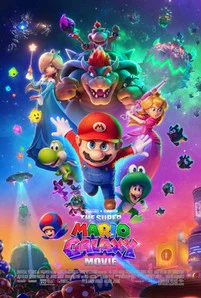
The Super Mario Galaxy movie poster.
Illumination’s latest take on a beloved gaming franchise doubles down on spectacle, nostalgia, and frantic joyride energy. Super Mario Galaxy delivers some of the most dazzling animation the studio has produced, blending hyper-detailed environments, bold color design, and kinetic action set pieces that feel lifted straight from a platforming level. But while the film is an audiovisual feast, its narrative structure and character beats will divide audiences — thrilling fans hungry for references, while leaving viewers craving a more satisfying emotional throughline.
Table of Contents
Visuals & Animation: A Technical Triumph
From the first frame, the movie announces itself as a technical showcase. The character models are expressive, textures are rich, and the use of squash-and-stretch animation gives even familiar faces fresh life. Set pieces are staged with game-like precision: creative camera angles, imaginative particle effects, and environments that feel both cinematic and level-designed. If you loved the idea of a Mario level brought to life, this film executes that concept brilliantly.
Action Choreography and Camera Work
There are multiple standout action sequences throughout the runtime, each visually distinct and tightly choreographed. The filmmakers lean into playful motion and inventive camera moves that amplify tension and wonder. These scenes are the film’s heartbeat — often more memorable than many of the story moments that connect them.
Music & Sound: A Love Letter to the Franchise
The score is one of the film’s most reliable emotional anchors. Familiar motifs and iconic Mario themes are reinterpreted with cinematic scope, while newer cues cleverly weave in light leitmotifs that evoke classic game moments. Unlike some blockbuster animated adaptations that overuse licensed pop tracks, this film keeps those moments to a minimum, allowing the orchestral and thematic work to define the soundscape.
Story & Pacing: Thrill Ride Over Substance
Plot-wise, Super Mario Galaxy opts for a loose, episodic approach more akin to a museum of franchise moments than a tightly structured three-act drama. The film trades deep thematic exploration for rapid-fire references, cameos, and set pieces. As a result, character arcs — particularly questions raised about Peach, Rosalina, Bowser, and Mario’s relationships — are touched on superficially and often left unresolved.
When Style Outpaces Story
There’s an argument to be made that the movie intentionally favors the sensation of playing a Mario game: short bursts of gameplay-like sequences, sudden tonal shifts, and frequent fan-service reveals. That works if you come for the spectacle. It frustrates if you expect narrative payoff or emotional depth. Scenes can feel rushed, and set-ups sometimes dissolve into the next big reference without payoff.
Characters & Voice Performances
Performances are energetic but constrained by the script’s brisk pace. A few characters — notably Bowser and his son — get more room to breathe and deliver stronger moments, while others barely register due to limited screen time. New additions to the cast bring charm, and some celebrity turns do shine, but the overall impression is that the ensemble doesn’t always have the time it deserves to land fully.
Standout Moments
Supporting beats and background details reward attentive viewers: subtle nods to classic games and small visual Easter eggs create moments of genuine delight. The film’s tonal variety — from heartfelt swells to slapstick gags — keeps momentum high, even when emotional resonance is light.
Fan Service & Franchise Faithfulness
If you’re a Nintendo fan, the movie reads like an affectionate compendium of beloved characters, locales, and sonic cues. It rewards familiarity, with many background details and cross-franchise references that will spark smiles. That said, the accumulation of cameos and callouts can feel like a catalog at times — impressive, but occasionally hollow without stronger connective tissue.
Who Should See It?
Super Mario Galaxy is best approached as a family-friendly spectacle and a nostalgia-driven ride. Kids and die-hard Nintendo fans will likely walk away thrilled by the visuals and references. Viewers seeking a more cohesive, character-driven cinematic experience may find the film lacking. In short: come for the animation and fan moments, not for a tight, emotionally rich narrative.
For readers who want official background or more context about the franchise and studio, visit Nintendo or learn about the animation team at Illumination.
Final Thoughts
Super Mario Galaxy is a dazzling technical achievement and a high-octane tribute to decades of gaming history. Its visuals and score will delight fans and make for a memorable big-screen experience, but its scattershot narrative and brisk pacing prevent it from becoming a truly great film. If you’re in it for the spectacle, cameos, and lovingly crafted game-to-film moments, you’ll have a blast. If you demand a tightly woven story with satisfying emotional arcs, temper expectations — the movie prefers to be a joyful roller coaster rather than a profound journey.