Shangri-La Frontier has moved from a cult favorite among light-novel and web-novel readers to a multimedia juggernaut — and the latest milestone makes that rise impossible to ignore. The manga adaptation by Ryōsuke Fuji has surpassed 16 million copies in circulation worldwide, underscoring the franchise’s fast-growing appeal across readers, anime viewers, and now gamers. Below we break down what makes Shangri-La Frontier resonate, recap its publishing and anime timeline, and look ahead to the next phase: a franchise-first video game.
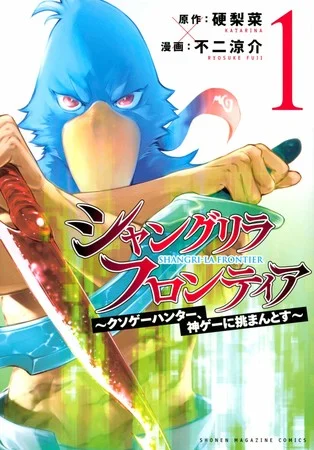
Table of Contents
Origins: From Web Novel to Mainstream Manga
Shangri-La Frontier began as a web novel by Katarina, serialized on the popular Shōsetsuka ni Narō site in May 2017. The story’s fresh take on game-centric storytelling and a protagonist who seeks out “shitty games” to crush them quickly earned a passionate following. The series’ transition to an illustrated manga by Ryōsuke Fuji expanded its audience even further, culminating in the recent announcement that the manga has exceeded 16 million copies in circulation worldwide.
For fans who want to revisit the original web publication, the series remains accessible on its original platform — a useful reference for readers curious about the novel’s early chapters and development. Read the original web novel on Shōsetsuka ni Narō.
What the Story Is About
Main premise
At its core, Shangri-La Frontier follows second-year high schooler Rakurō Hizutome, an expert gamer with a very particular hobby: he seeks out and conquers the worst video games he can find. When the new VRMMO Shangri-La Frontier launches, Rakurō approaches it with his usual irreverent efficiency — skipping the prologue, min-maxing his playstyle, and diving straight into high-stakes exploration. The series blends sharp gameplay logic with character-driven humor and surprisingly deep worldbuilding.
Why Rakurō stands out
Rakurō isn’t the conventional “power-fantasy” protagonist. His obsession with challenging, poorly designed games gives the story a meta layer: it’s as much a love letter to gaming culture as it is a fantasy adventure. The narrative rewards tactical thinking and curiosity, making it satisfying for readers who enjoy both character growth and clever combat strategies.
Manga Milestone: 16 Million Copies and What It Means
Hitting 16 million copies in circulation is a major achievement, especially for a series that began on a web-novel platform. This metric reflects not only strong domestic sales but substantial international interest as well — a combination of dedicated manga readers, anime viewers who discover the source material, and new audiences drawn in by word of mouth.
That level of circulation typically indicates healthy cross-media momentum: higher demand for collected volumes, stronger merchandising potential, and increased licensing interest. For a franchise like Shangri-La Frontier, which leans into both gaming and anime communities, that kind of popularity creates fertile ground for expansions beyond print.
Anime Adaptation: Seasons and Streaming
Season-by-season recap
The anime adaptation helped accelerate the franchise’s mainstream visibility. The first season premiered in October 2023 on MBS/TBS networks and aired across two consecutive cours, introducing Rakurō’s world to a much broader audience. The second season premiered in October 2024 and also ran for two consecutive cours; streaming partners simulcast the series and provided an English dub to reach international viewers.
Looking ahead to season three
Fans have reason to be excited: the anime’s third season is scheduled to premiere in January 2027. With two multi-cour seasons already establishing a dedicated viewer base, season three is positioned to build on that momentum and possibly adapt even deeper arcs from the manga source material.
The Franchise’s First Game: A New Frontier
Adding another dimension to the franchise’s growth is the announcement of the first Shangri-La Frontier game, titled Shangri-La Frontier ~Nanatsu no Saikyō-shu~ (Shangri-La Frontier: The Seven Colossi), currently in development by Netmarble Nexus. The game represents a natural extension of the series’ in-world focus on VRMMOs, and it gives fans a chance to experience the franchise’s mechanics firsthand.
Bringing a game to market also expands marketing and crossover opportunities: game players who discover the franchise digitally may pick up manga volumes, while anime viewers may be enticed to try the game to relive or reimagine key moments. For a property that celebrates gaming culture at its core, this synergy is particularly compelling.
Why Shangri-La Frontier Resonates Now
- Genre blending: It mixes meta-gaming commentary with genuine fantasy-world stakes, appealing to readers who enjoy both thoughtful mechanics and character-driven stories.
- Accessible protagonist: Rakurō’s unconventional approach — enjoying and mastering “bad” games — makes him memorable and relatable to gamers who have their own niche tastes.
- Cross-media strategy: Successful manga, streaming anime with dubs, and an approaching video game create multiple entry points for different audiences.
- Consistent releases: Regular new content and season launches keep the franchise in conversation across social platforms and fan communities.
How New Fans Should Start
If you’re new to Shangri-La Frontier, there are a few easy ways to jump in: start with the manga for the definitive visual storytelling experience, watch the anime to see the world animated and hear the characters brought to life, or explore the original web novel to compare early drafts and author notes. Each format provides a slightly different flavor of the story, and together they create a fuller picture of why the series has connected with so many readers.
Recommended order
- Manga — for pacing and artwork that capture the game systems and battles.
- Anime — to experience the score, voice acting, and cinematic presentation.
- Original web novel — for the author’s earliest vision and bonus details not always adapted into other formats.
Final thoughts
Surpassing 16 million copies in circulation is a clear signal that Shangri-La Frontier has evolved from a niche web phenomenon into a major cross-media property. Its success is driven by intelligent worldbuilding, an offbeat protagonist, and a strategy that leverages manga, anime, and games to reach diverse audiences. With a video game in development and a third anime season on the horizon for January 2027, the franchise shows no signs of slowing down — and it’s an excellent example of how modern storytelling can thrive when it embraces both fandom culture and high-quality adaptation.