Table of Contents
Exploring “I’m a Noble on the Brink of Ruin, So I Might as Well Try Mastering Magic”
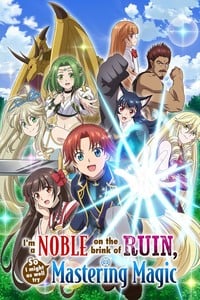
In the realm of fantasy anime, “I’m a Noble on the Brink of Ruin, So I Might as Well Try Mastering Magic” embarks on a path well-trodden with themes of reincarnation and magic. It does so with a unique lens, though not without its pitfalls. As we delve into this anime, we encounter a world where magic, politics, and moral dilemmas interweave, showcased through the journey of a reincarnated office worker turned aspiring sorcerer.
A Familiar Tale with a Twist
The protagonist, Liam Hamilton, is no stranger to the themes of struggle and redemption. Born as the fifth son of a faltering noble house, Liam discovers his extraordinary aptitude for magic, setting him on a journey of power and self-discovery. Unlike many fantasy series, this one explores not only the external challenges of magic and nobility but also internal moral conflicts, kept simmering below its vibrant plot.
Comparisons with Popular Titles
It’s inevitable to draw parallels between "I’m a Noble on the Brink of Ruin" and fan favorites like "That Time I Got Reincarnated as a Slime." Yet, despite these similarities, the anime attempts to carve out its niche by focusing on Liam’s obsession with magic—a double-edged sword that promises both glory and unforeseen perils.
Character Development: A Hit or Miss?
Unfortunately, this anime doesn’t capitalize on its potential to develop its diverse cast. Many secondary characters fall into archetypal roles—the wild yet gentle wolf girl, the stalwart ogres, and the honorable elves—all fading into the background as the story progresses. It’s a narrative choice that leaves viewers craving more depth and dynamism.
Liam’s Complex Morality
Liam’s character arc presents a thought-provoking premise: at what cost does one pursue greatness? His inventions in magic are portrayed as benevolent, yet his actions underscore a potential for catastrophe due to their sheer power. This raises ethical questions rarely explored in such genres, offering a glimmer of narrative depth.
Slavery: A Dark Undercurrent
A controversial aspect of the show is the theme of "familiar-slavery," where creatures voluntarily bind themselves to Liam, gaining enhanced abilities in exchange for free will. This peculiar quid pro quo offers a philosophical quandary: Is the sacrifice of autonomy justifiable if it leads to an improved quality of life? While the anime hints at this dilemma, it fails to deeply explore its implications.
Visuals and Soundtrack
While the narrative may struggle, the anime’s soundtrack emerges as an unexpected triumph. Composed by Arisa Okehazama, the music adds a layer of grandeur, contrasting sharply with the otherwise mediocre animation. The art suffers from inconsistent character proportions and frequent reuse of scenes, detracting from the overall experience.
Final Thoughts
"I’m a Noble on the Brink of Ruin, So I Might as Well Try Mastering Magic" exemplifies an intriguing concept marred by its execution. The series’s lack of emotional tension and character development ultimately weakens its impact. Still, its underlying moral questions and phenomenal score make it worth a peek for those interested in philosophical musings in anime (more on exploring existential themes in fantasy in this guide).
In a world populated by isekai narratives, this anime dares to navigate familiar waters with subtle inquiries into free will and morality. For enthusiasts willing to overlook its shortcomings, it offers a reflective, though flawed, viewing experience.