Roughly eighty years after a band of heroes defeated the Demon King, Frieren: Beyond Journey’s End returns us to a quiet, thoughtful corner of fantasy where time itself becomes the central character. This review-style exploration looks at what makes Frieren resonate so deeply—its themes of grief and memory, its standout performances, and what collectors should know about the home video releases. If you fell for the show’s melancholy charm when it first aired, the Blu-ray releases (standard and limited) give fans a tactile way to revisit those small, life-changing moments.
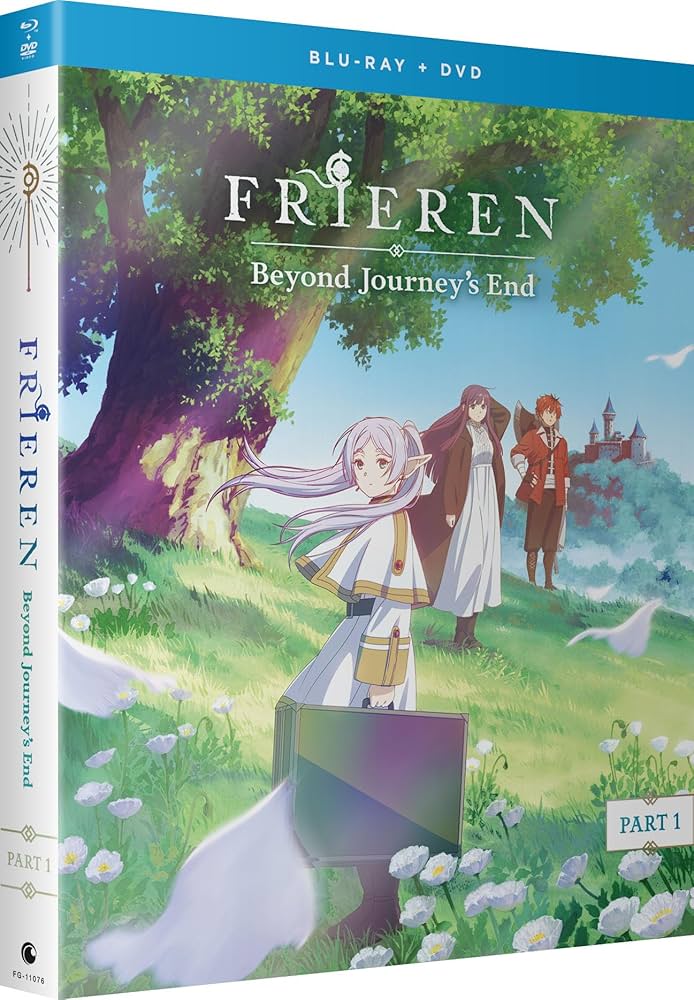
Table of Contents
What Frieren Is Really About
At its heart, Frieren: Beyond Journey’s End is a meditation on time, loss, and the small acts that become someone’s legacy. Frieren, an elf who lives for centuries, processes years and relationships in a way mortals cannot. That temporal gulf is the engine of the series: it gives us an outsider’s view of human urgency and fragility. The show cleverly flips standard fantasy expectations—rather than sword-heavy heroics, the emotional stakes come from what characters remember, regret, and choose to pass on.
Pacing and Tone: Slow, But Purposeful
The series favors a deliberate pace, giving scenes room to breathe and emotions time to land. This contemplative rhythm will reward viewers who enjoy introspective storytelling; it can feel slow if you expect non-stop action. That slowdown is intentional, though: the space between events is where Frieren’s real power lives. The quieter moments—meals shared, brief confessions, or the dull ache of a funeral—are allowed to linger, and they accumulate into a narrative that feels lived-in rather than plotted.
Characters and Standout Performances
Frieren’s emotional core is supported by a small, tightly-knit cast. The dynamic between Frieren, her apprentice Fern, and the human companions highlights differences in lifespan and perspective in a way that never feels heavy-handed. Both the original Japanese cast and the English dub deliver strong work, making the series accessible without losing nuance.
Particularly notable is the way multiple actors can inhabit the same character differently and still feel authentic. The Japanese performance emphasizes contrast between age and youthful appearance, while the English dub leans into a lower register that underscores Frieren’s long experience. Supporting performances—especially the younger cast members—bring warmth and weight to the story’s quieter beats.
Pivotal Themes: Memory, Prejudice, and Legacy
Frieren touches on several resonant themes. The show examines prejudice in subtle ways—most notably through Frieren’s initial assumptions about demons. These moments introduce moral complexity that the narrative later interrogates. Another recurring theme is legacy: characters like Serie, who build institutions and bend history, are contrasted against those whose legacy arises from everyday kindness. The series suggests that both paths matter, but it privileges the quiet, cumulative effect of small deeds.
The First-Class Mages Exam: A Change of Rhythm
Mid-season, Frieren and Fern tackle the First-Class Mages Exam, an arc that introduces a wider cast and a slightly faster pace. It borrows some tournament-arc trappings—new rivals, test sequences, and intensified stakes—but keeps the series’ introspective DNA intact. The exam functions as a social mirror, introducing new people Frieren and Fern will carry forward on their journey and providing contrast to the earlier, more intimate episodes.
Technical Merits: Animation, Sound, and Music
Visually, the show balances classic fantasy aesthetics with crisp, modern animation. The production design evokes Dungeons & Dragons-style settings while remaining grounded in character moments. Direction and storyboarding contain surprising flourishes that elevate quiet sequences into memorable set pieces.
Sound design and score are standout elements. Evan Call’s compositions complement the show’s melancholic tone, while the theme song—performed by milet—provides an emotional anchor that recurs at key moments. On the technical side, subtle reverbs and spatial audio choices occasionally amplify the sense of presence, especially in dungeon or cavern scenes.
Home Video Presentation: What’s Good—and What Misses
The Blu-ray releases deliver clean video and a solid supplemental package, but there are a few technical and editorial frustrations. On-screen location and time stamps that appeared as stylish overlays in the streaming release are formatted awkwardly on disc, appearing as hard-to-ignore text at the top of the picture. For home video collectors who expect parity or improvement over streaming, this is an odd oversight.
Another editorial gripe involves the credits: Part 1’s episode-specific credits gave individual contributors their due, while Part 2 condenses those names into a single roll. Viewers who care about production credits and localizations will find this disappointing; consistent crediting should be standard across a season set.
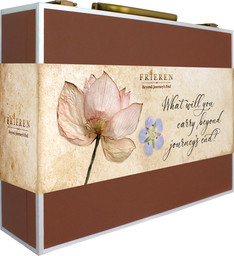
ollector’s Editions: The Suitcase Set
The limited edition “suitcase” set is an exceptionally curated collector’s item. Plush packaging, a faux-tome case that holds both parts, shikishi art cards, sticker sheets, and a generous artbook make this a joy to unbox. The faux tome’s leather-like texture and gold embossing feel lovingly crafted—a centerpiece any fan would be proud to display.
However, the price point is high. The standard editions are more budget-friendly and often appear on sale through major retailers; the limited set is a splurge best purchased during a discount event. If you prioritize physical artifacts and deluxe presentation, the suitcase set is worth considering; otherwise, the standard Blu-rays offer the core experience with fewer frills. For purchase and streaming details, check official sources like Crunchyroll (rel=”nofollow”) or the studio’s site
Who Should Watch Frieren?
Frieren is ideal for viewers who appreciate character-driven fantasy and quiet, reflective storytelling. If you enjoy shows that prioritize emotion, memory, and slow-burn revelations over constant spectacle, this series will likely stay with you long after the credits roll. Expect to be moved more by conversations and recollections than by battle choreography alone.
Final thoughts
Frieren: Beyond Journey’s End is a rare fantasy that finds its power in restraint. Its examination of time, loss, and the imprint of small kindnesses makes it emotionally resonant and repeatedly rewatchable. While the home video releases carry minor presentation issues and a premium limited edition price tag, the series itself remains a standout—quietly powerful, lovingly produced, and deeply human despite its fairy-tale trappings. If you value thoughtful storytelling and collectible editions, Frieren is worth both your time and consideration.