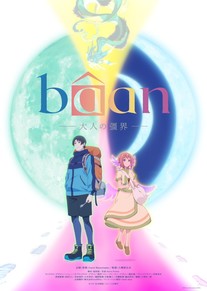
Bâan -The Boundaries of Adulthood- is a 20-minute short that explores the fragile, often messy search for home through the eyes of two recent graduates who intentionally swap worlds. Equal parts bittersweet coming-of-age drama and gentle fantasy, the film frames the expat experience—leaving the familiar for something unknown—with visual storytelling and a memorable score. Below we break down why this short lands emotionally, where it leans on contrivance, and what makes it worth a watch for fans of evocative, slice-of-life anime shorts.
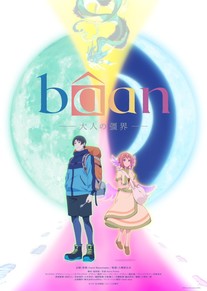
Cover image: Bâan -The Boundaries of Adulthood-
Table of Contents
Premise and Synopsis
Set in a near future where Earth and the fantasy realm of Euthenia are mutually accessible, Bâan follows two protagonists who literally cross borders in search of belonging. Daichi, freshly graduated and unwilling to join his family business, relocates to Euthenia to try a simpler life. Rin, an Euthenian girl and daughter of a human immigrant, arrives on Earth to experience the culture she admires—only to find it less idyllic than she imagined. Their parallel journeys create a mirror on what “home” means when identity and place don’t align.
Thematic Core: Expat Life and the Search for Home
Belonging and Choice
At its heart, Bâan is an allegory for the expat experience: the thrill of leaving, the romanticized expectations of a new country, and the eventual decision to stay or return. The film stresses that both outcomes are valid—finding a new home or returning to the familiar are equally honest responses to the challenges of adulthood.
Identity Across Borders
Rin and Daichi each confront the mismatch between expectation and reality. Rin’s enchantment with Earth is complicated by cultural friction and the lived realities of being “other.” Daichi’s initial attraction to solitude gradually gives way to community ties that complicate a simplistic escape narrative. This dual perspective avoids hero-centric melodrama and instead centers on quiet, human adaptation.
Characters: Daichi and Rin
Daichi is drawn to self-sufficiency—a pastoral fantasy of living off the land in Euthenia. His arc is about realizing that solitude and belonging are not mutually exclusive: people and place eventually find a way to intersect. Rin’s arc is more fraught; she possesses literal magic—telekinesis and flight—but that power does not magically grant social or economic acceptance on Earth. Her disillusionment is the engine of much of the story’s emotional weight.
Visual Storytelling and Direction
Studio daisy uses the short runtime to maximum effect, prioritizing imagery and composition to carry exposition and emotion. Visual motifs—like the dragon-like Naga of Euthenia and the changing hues of Rin’s magical wings—serve as shorthand for cultural meaning and inner state. There’s a clever directorial twist in the film’s composition that intentionally misleads the viewer into certain assumptions, only to reveal deeper truths about the characters halfway through. That structural choice amplifies the emotional payoff.
Artistry in a Compact Runtime
With roughly 20 minutes to tell its tale, the film relies on tight visual beats rather than extended dialogue. This economy of storytelling rewards attentive viewing: small gestures, a color shift, or a background detail often carry as much narrative weight as explicit lines of exposition.
Music and Sound: Emotional Heavy Lifting
The score, composed by Kevin Penkin, plays a critical role in shaping the film’s atmosphere. In a short where every second matters, the soundtrack assumes much of the emotional scaffolding—elevating contemplative sequences and underscoring the bittersweet moments of clarity. Penkin’s work here complements the imagery, helping the film communicate feelings that the script leaves deliberately sparse.
Strengths and the One Major Weakness
Bâan excels at mood, thematic resonance, and visual economy. The expat allegory lands with authenticity for anyone familiar with moving countries after graduation: the early optimism, the cultural friction, the eventual hard decisions. The short’s main flaw is contrived plotting where the story requires characters to accept implausible outcomes—most notably Rin’s difficulty finding meaningful work despite clear magical advantages. This narrative convenience is the film’s primary blemish, but it exists to force the protagonist into the emotional arc the short wants to explore.
Release and Access
The short is intended for release on the creator’s channel with both dubbed and subtitled options, making it readily accessible to international viewers. For updates and viewing information, check the official uploader’s channel for release dates and follow-up material, including a planned documentary about the film’s creation. Gigguk’s YouTube channel is the announced platform for the premiere and related content.
Why Fans Should Watch
- Concise, emotionally resonant storytelling that treats the expat experience with nuance.
- Striking visual language that uses color and composition to replace expository scenes.
- A lush, evocative score that amplifies the film’s emotional resonance.
Final thoughts
Bâan -The Boundaries of Adulthood- is a thoughtful short that translates a very specific, adult anxiety—the search for home after graduation—into a poised, fantastical tale. While the screenplay occasionally leans on contrivance to advance character disillusionment, the film largely succeeds through mood, excellent animation, and a soundtrack that gives its 20 minutes surprising emotional breadth. For viewers who appreciate quiet, reflective anime that lingers on questions of identity and belonging, Bâan is a rewarding watch and a compact reminder that “home” is less a place than a decision.