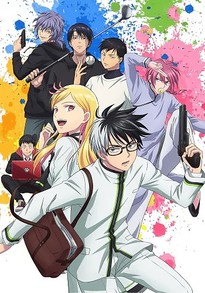
Kill Blue arrives as an oddball blend of noir hitman thrills and middle-school slice-of-life, a concept that promises kinetic action and fish-out-of-water comedy in equal measure. The premise—an elite hitman chemically regressed into a middle schooler and forced to infiltrate a school tied to the very company that did this to him—creates fertile ground for absurd set pieces and emotional beats. Unfortunately, the anime struggles to balance its opposing tones: its opening episodes flash some real promise, but the momentum and visual fidelity slide as the cour progresses.
Table of Contents
Brief synopsis
Veteran hitman Juzo Ogami’s life of late-night contracts and greasy ramen takes a drastic turn after an experimental wasp sting reverses his age. With his employer seeing a chance to place a mole inside a middle school, Juzo is sent undercover to enroll—only to discover the target student is the daughter of the pharmaceutical executive behind the weaponized insect. Forced to juggle homework, clubs, and a violent professional past, Juzo must hide his true identity while navigating youth culture and unexpected attachments.
What the anime does well
The first one-to-two episodes are the series’ highlight. Action sequences early on pop with confident direction, slick choreography, and a jazzy soundtrack that elevates shootouts and chase moments. These scenes capture the noir energy of the premise—gritty nights, sharp gunplay, and a protagonist whose deadpan code of honor (“treat a lady with respect”) lands with satisfying weight. The show’s color palette, dominated by layered blues, helps sell those nocturnal sequences while allowing brighter hues to emphasize the surreal school-life contrast.
Voice performance and tone
One of the adaptation’s strengths is the lead’s vocal delivery: a smoky, detached performance that makes the character feel convincingly world-weary despite his childlike body. That tonal counterpoint—mature inner monologue against adolescent antics—remains one of the series’ more compelling hooks.
Where the adaptation falters
Sadly, the show’s promise begins to erode roughly a few episodes in. Animation quality dips, particularly during sequences that should be showstoppers: sports matches and large-scale confrontations lose clarity and fluid motion. Backgrounds adopt an increasingly “smudgy” texture intended to stylize environments, but at times this aesthetic choice reads as unfinished or muddy, undermining the kinetic energy those scenes require.
Sports sequences — a missed opportunity
Perhaps the most disappointing element is how the anime handles athletic set pieces. The manga’s enthusiastic sports choreography—one of the original work’s signature pleasures—doesn’t translate with the same vigor. An indoor soccer match and a later stadium showdown feel oddly static: characters lumber through plays without the limb-by-limb intensity or fluid camera work necessary to sell speed and stakes. When the narrative leans into tournament-style spectacle, the adaptation rarely follows through with the visual punch it needs.
Story beats and pacing
Another recurring issue is pacing. The series often diverts into extended school-life vignettes—home economics, ramen cookoffs, memory-loss romantic beats—that dilute the hitman urgency. These moments can be charming in moderation, but here they linger long enough to slow narrative momentum. Where the manga sometimes suffered from similar tonal drift, the anime’s slower pacing makes the diversion feel more pronounced; viewers eager for more action will likely feel shortchanged.
Character moments that work
When the show focuses on the dichotomy between Juzo’s professional instincts and his forced role as an adult in a child’s body, it finds interesting emotional textures. Scenes where he defends or mentors students land because they add complexity to a character who could have been a one-note archetype. Secondary cast members—like the multi-talented Tenma—provide solid moments, even if the anime doesn’t always maximize their arcs.
Visual design and color
The series’ heavy use of blue tones is mostly effective: nighttime noir scenes gain atmosphere, and lighter blues create a sense of youthful levity during daytime scenes. However, some color choices—particularly a muddy yellow-green in the stadium sequence—detract from the intended spectacle and give the turf an unappetizing look. The contrast between thoughtfully composed early episodes and rougher later animation makes the downgrade feel more abrupt.
Should you watch Kill Blue?
If you’re intrigued by genre mashups and enjoy noir-tinged premises mixed with absurd fish-out-of-water comedy, the opening stretch is worth a look. For fans of the mangaka’s previous sports work—see Tadatoshi Fujimaki for background—there’s still curiosity value in seeing how those influences show up here. That said, go in with tempered expectations: the series doesn’t consistently deliver the action set pieces or pacing balance that would elevate it into must-see territory.
Final thoughts
Kill Blue is an uneven but occasionally entertaining adaptation. Its strongest moments—slick early action, an intriguing tonal clash, and a charismatic lead performance—offer glimpses of what this premise could have consistently achieved. However, dips in animation quality, sluggish pacing, and underwhelming sports sequences hold it back from fulfilling its potential. For viewers craving gunplay wrapped in surreal school comedy, there’s enough here to spark interest; for those expecting sustained, high-octane spectacle inspired by the manga, the anime may feel like a missed opportunity.