The Ninth Jedi (Star Wars: Visions Presents) delivers a confident, emotionally driven take on the galaxy far, far away — one that leans into anime storytelling to expand the Force’s moral complexity while delivering kinetic action and striking visuals. Blending episodic adventure with a classic three-act Star Wars arc, this series asks the question: what happens when power, trauma, and conviction collide in the hands of those meant to protect the innocent?
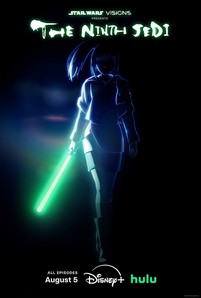
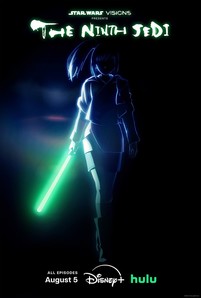
Official poster — The Ninth Jedi.
Table of Contents
Synopsis — The Setup for a New Jedi Tale
Set in a fractured galaxy ruled by ruthless warlords, The Ninth Jedi follows the last flickers of the Jedi legacy as Margrave Juro attempts to reassemble the Order and free his sector from the iron grip of the masked warlord Nawaam. At the center is Kara (Lah Kara), a young untrained but powerful force user who seeks to rescue her bladesmith father, Lah Zhima — the last living maker of lightsabers. What begins as a rescue mission slowly expands into a conflict that forces each character to confront the ethics of power, revenge, and responsibility.
Story Structure and Pacing
The series smartly uses a trilogy-like structure across its episodes. The opening pair (adapted Visions shorts) introduces the world, characters, and stakes. The middle stretch covers early triumphs and a devastating fall, while the final segment pushes characters toward catharsis and resolution. This pacing lets the show deliver both self-contained adventures and a satisfying overarching narrative arc.
Early episodes favor adventure and worldbuilding over deep characterization, with returning allies and new recruits slotting into familiar heroic beats. But as the show moves into its second half, character work takes the foreground, and the storytelling deepens into a character-driven meditation on choice and the nature of strength.
Characters and Themes
Kara — A Hero Torn Between Compassion and Consequence
Kara’s arc is the emotional spine of the series. Her force sensitivity grants her tremendous power, but the series is less interested in power as spectacle and more in how power reshapes identity. Kara is repeatedly confronted with the moral cost of violence: when is lethal force necessary, and when does it corrupt the wielder? Her temptation toward a Zen-like detachment — a state Nawaam believes grants true strength — is presented as an attractive but morally hollow solution. In the end, Kara’s greatest strength is empathy: she chooses to raise people up rather than simply destroy them.
Nawaam and Zhima — Philosophy and the Weight of the Past
Nawaam embodies a brutal philosophy: order through domination. To him, emotional attachments and moral labels are weaknesses to be purged. Opposing him is Zhima, whose past with the fledgling Jedi Order haunts him and shapes his obsession with building lightsabers that reveal inner states. Their shared history becomes the narrative fulcrum, forcing both men to reckon with their choices. Thematically, the trilogy uses their conflict to examine whether peace can be enforced by power or must be earned by collective moral growth.
Visuals, Sound, and Fight Choreography
Visually, The Ninth Jedi is consistently strong. Space engagements feel dangerous and dynamic, while lightsaber duels utilize the animated medium to deliver imaginative sequences that would be difficult to stage in live action. The soundtrack nods to the Star Wars orchestral voice without imitating it, preserving franchise familiarity while carving out its own musical identity. The result is a sensory experience that supports rather than overshadows the character-driven drama.
Lightsabers as a Storytelling Device
One of the series’ most inventive elements is its use of color-changing lightsabers. Rather than merely being a cosmetic flourish, blade colors function as visual cues of mental and moral state, effectively externalizing inner conflict for the audience. This mechanic becomes a key narrative tool during crucial moments, turning weapon design into character psychology and elevating the emotional stakes of duel scenes.
Why The Ninth Jedi Matters for Star Wars Fans and Anime Lovers
For longtime Star Wars followers, the series is a thoughtful addition that revisits core franchise ideas — redemption, moral choice, and the tension between order and freedom — through an anime lens. For anime fans, it’s a sophisticated, genre-savvy drama that uses serialized structure to blend episodic adventure with a concentrated character study. The series is accessible to new viewers while offering richer rewards for those familiar with franchise lore.
If you’re interested in further reading about Star Wars storytelling or where this series fits within the larger canon of visual interpretations, the official Star Wars hub is a good starting point (rel=”nofollow”). For streaming options and platform details, check official service pages (rel=”nofollow”).
Strengths and Minor Shortcomings
The Ninth Jedi shines in its mid-to-late character development, moral complexity, and inventive visual storytelling. Its early episodes can feel thematically shallow at times, relying on archetypal side characters who act as familiar support rather than fully realized players. However, those initial beats set up the emotional payoff that arrives later, making the investment worthwhile.
Final thoughts
The Ninth Jedi is a standout entry in the recent wave of Star Wars animated projects: visually compelling, emotionally resonant, and philosophically intriguing. It asks difficult questions about the nature of justice and power without surrendering to cynicism, ultimately affirming that compassion and choice remain the truest measures of a Jedi. Whether you came for the lightsaber set-pieces or the quiet moral reckonings, this series rewards viewers who stay with it — and will likely stay with them long after the credits roll.