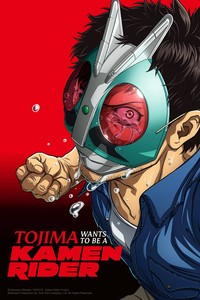
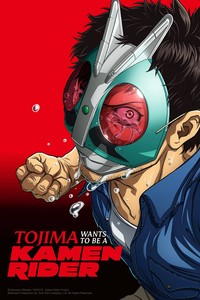
Tojima Wants to Be a Kamen Rider — Episodes 15–24 poster.
Tojima Wants to Be a Kamen Rider doubles down in its back half, shifting from episodic riffs on the Kamen Rider mythos into a tightly interconnected arc where stakes grow darker and character work becomes the show’s heartbeat. What begins as playful homage to tokusatsu heroics quickly evolves into a surprisingly mature meditation on obsession, loyalty, and what it truly means to fight for something you love. Below I break down the synopsis, core themes, character development, and production elements that make episodes 15–24 a compelling continuation of this unconventional Rider story.
Table of Contents
Synopsis: Shocker, Bat Man, and an Idol-Sized Threat
In an alternate world where official Kamen Riders never existed, the villainous Shocker dominates society using hidden Combatmen and monstrous plots. Into that power vacuum steps Bat Man, whose plan moves beyond traditional conquest: he weaponizes the Japanese idol industry, forcing performers and their obsessed fans into an army of Combatmen. The scale of his scheme—turning entertainers and devotees into living weapons—creates a terrifying, large-scale threat that forces the scattered would-be Riders to become something more than lone obsessives.
Major Themes: Love, Obsession, and Becoming
Love as Redemption and Power
Where many tokusatsu pastiches mine nostalgia and camp, Tojima’s second half uses the idea of love as a literal catalyst. Characters break Shocker’s control not through a Deus Ex Machina, but via emotional bonds: Yukarisu’s devotion to Mitsuba, the yakuza trio’s brotherly loyalty to Nakao, and even Spider Man’s awakening through his feelings for Sena. Love is both the show’s emotional core and its narrative engine—fueling growth, healing trauma, and ultimately turning followers into fighters.
Obsession vs. Community
The series interrogates obsession in a way that feels authentic to fans and non-fans alike. Tojima and company aren’t normal heroes; they emulate Kamen Riders out of admiration that tips into single-mindedness. That relentless focus gives them skill but also isolates them. The arc makes it clear: personal dreams can carry you far, but only a community can win a war. The team-up episodes—where Nakao and others are finally welcomed into the fold—show how connection amplifies individual drive into a force capable of stopping Bat Man’s plan.
Character Development: Side Cast Shine
One of the show’s smartest moves in episodes 15–24 is giving secondary figures room to breathe. Futaba, Naoko, Sena, Spider Man, and Thunder Raiko receive meaningful beats that expand the world beyond Tojima and the primary Riders. These detours sometimes delay the main group’s action, but they enrich the narrative by showing how the crisis affects ordinary people and fringe fighters alike. This ensemble approach strengthens the emotional payoff when the cast finally unites.
Tojima and the Cost of Single-Mindedness
Tojima’s life revolves around training, punching trees, and striving—little else. That austerity makes him formidable but vulnerable: when confronted with Bat Man’s sprawling scheme, Tojima must learn collaboration rather than lone heroics. The personal arcs in the back half highlight that growth: achieving a dream isn’t just about relentless effort, it’s about who you allow beside you.
Visuals & Sound: A Feast for the Senses
Visually, the anime leans into bold outlines, deep shadows, and explosive color palettes that give even static frames cinematic weight. The animation sells impact—punches and throws land with visceral force, making fights feel consequential. Sound design pulls from classic tokusatsu Foley while blending modern scoring techniques. The result is an auditory landscape that amplifies each blow and emotional beat, and a battle theme that sticks long after episodes end.
Stylistic Choices That Work
The juxtaposition of campy premise and gritty execution creates a compelling aesthetic tension. Scenes that could be played for laughs are instead staged with a seriousness that lends genuine dread to Bat Man’s schemes—particularly sequences where victims are turned into honey-trap Combatmen. The show trusts its audience enough to handle dark moments without undercutting them with parody.
Why This Arc Stands Out
Episodes 15–24 take a premise built on homage and elevate it into something more substantial. The stakes are clearer, the villain’s plan is frighteningly pragmatic, and character work deepens to complement the action. Whether you’re drawn by nostalgia for Rider-style heroics or curious about an anime that balances humor with horror, this stretch provides both spectacle and emotional resonance.
Learn more about the Kamen Rider legacy
Final thoughts
The back half of Tojima Wants to Be a Kamen Rider is a satisfying evolution from affectionate pastiche to a fully realized action-drama. Through strong thematic focus on love and community, fleshed-out supporting characters, confident visual direction, and excellent sound design, the series proves it can do more than mimic a beloved genre—it can interrogate and expand it. If you’re looking for a show that pairs punchy tokusatsu thrills with earnest emotional stakes, these episodes deliver a memorable ride.