A Wild Last Boss Appeared! takes a familiar isekai premise—a top-tier MMO player suddenly transported into the body of their in-game character—and spins it into an engaging study of identity, legacy, and a world left fractured two centuries after its greatest conqueror fell. The series balances sweeping worldbuilding with bold visuals, even as its character work occasionally leaves the show wanting more depth. Below, we break down what makes the anime worth watching and where it could improve.
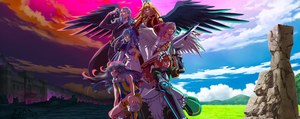
Lufas Maphaahl: a legendary conqueror, now the vessel for an MMO player’s consciousness.
Table of Contents
Premise and narrative hook
The story opens with a striking premise: an elite Exgate Online player awakens inside the body of Lufas Maphaahl, a ruthless ruler famed across the game’s history. However, it isn’t the same game session he remembers—two hundred years have passed since Lufas’ final defeat, and the world is a shadow of its former self. Rather than a straightforward power-fantasy romp, the plot is largely driven by discovery: the protagonist (often simply referred to as “the player”) must piece together what happened in the intervening centuries and what remnants of Lufas’ reign remain.
Worldbuilding: strong, steadily revealed
One of the show’s biggest strengths is how it unfolds the world. Information is doled out organically as the protagonist investigates ruins, questions surviving factions, and reconnects with allies from Lufas’ era. This investigative pacing prevents the story from sinking into heavy-handed lore dumps and lets viewers learn alongside the main character. The contrast between the world under Lufas’ rule and the degraded state it has become adds a melancholic weight to the series that makes exploration feel meaningful.
Layered mysteries and setting payoff
Rather than relying solely on exposition, the anime uses environmental storytelling and character encounters to reveal the setting’s history. The mystery of why the world crumbled after Lufas’ fall becomes a driving question that keeps the narrative moving, and the episodic revelations often land in ways that reward attention.
Characters: an uneven cast
Where the anime shines in setting, it falters in character depth. Aside from Lufas—whose in-game persona and residual memories provide intriguing beats—the supporting cast tends toward archetype. Many allies and antagonists are recognizable MMO or fantasy stock characters, which dulls the emotional stakes when conflicts turn personal. The player’s internal conflict about inhabiting a female character’s body and the slow erosion of his original identity are compelling ideas, but these themes are sometimes underexplored or left for future seasons to handle fully.
Identity and missed opportunities
The juxtaposition of “Lufas the character” (a legendary female ruler) and “Lufas the player” (a person from outside the game) opens strong thematic doors: gender, attraction, and the nature of self after reincarnation. The series acknowledges these issues but often skirts deeper interrogation, which is disappointing given how central they could be to the protagonist’s arc. That said, glimpses of the original Lufas’ memories and the player’s gradual changes hint at a richer exploration to come.
The series leans into dramatic flashbacks to reveal Lufas’ past and the game’s former glory.
Visuals, animation, and soundtrack
Visually, the series frequently impresses. Backgrounds glow with painterly light, hair and fabrics move with delicate physics, and large-scale battle choreography tends toward the explosive and cinematic. These production values elevate many scenes—especially action sequences—making them exciting even when the plot is treading familiar ground. The soundtrack supports the tone well, delivering a handful of memorable cues that punctuate emotional and combat moments. Voice performances are a strong suit too; the lead’s ability to toggle between bewilderment and an imposing in-character presence helps sell both the humor and the gravitas of certain scenes.
How it fits in the crowded isekai/game adaptation space
Game-based isekai has become a crowded genre, but this title stands out by committing to melancholic worldbuilding and a slow-burn mystery. It isn’t purely fanservice or power fantasy—there are consistent attempts to interrogate legacy and what it means to shape a world, even if character work doesn’t always match those ambitions. If you’re fatigued by generic game-anime repeats, this show’s visual polish and setting-focused storytelling make it worth sampling.
Where it could improve
- Deeper character work for the supporting cast to raise emotional stakes.
- More sustained exploration of the player’s changing identity and how gender and sexuality factors into that transformation.
- Stronger payoff for the setup in the first season—some plot threads feel intentionally deferred.
Further reading
For basic series details or episode lists, the Wikipedia entry is a useful, centralized reference. Wikipedia: A Wild Last Boss Appeared! For community-driven ratings and a catalog of staff and cast, check the series page on MyAnimeList. MyAnimeList — A Wild Last Boss Appeared!
Final thoughts
A Wild Last Boss Appeared! is an ambitious game-turned-anime that often succeeds on atmosphere and scale even when its character drama is uneven. Its smart worldbuilding and strong visuals make it one of the more interesting entries in the game-isekai niche, and the seeds it plants around identity and legacy suggest a richer story could follow in subsequent seasons. If you appreciate evocative settings, cinematic fights, and a slow-burning central mystery, this adaptation is worth your time—especially as a title that promises more depth to come.