“Cosmic Princess Kaguya!” reimagines a classic folktale through a neon-lit Gen Z lens, blending VR spectacle, pop-musical energy, and a heartfelt coming-of-age story. Director Shingo Yamashita teams with Studio Chromato and Studio Colorido to deliver a 142-minute ride that is equal parts charming and uneven — a film that dazzles in its musical set pieces and emotional duo dynamics, even as its screenplay sometimes loses traction.
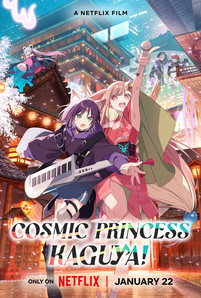
Cosmic Princess Kaguya! — a modern riff on The Tale of the Bamboo Cutter
Table of Contents
Synopsis — A Modern Bamboo Cutter for the Digital Age
At the heart of the film is Iroh, a 17-year-old juggling school, part-time work, and the heavy weight of early adulthood. One fateful night a struck utility pole presents her with an infant who rapidly matures into Kaguya — a moon-born girl with boundless curiosity and a hunger for earthly delights. As their unlikely guardianship deepens, the pair retreat into Tsukuyomi, a glittering VR cyberspace stewarded by the AI idol Yachiyo. There, they form a musical duo and compete in the Yachiyo Cup, but an ancient lunar claim on Kaguya threatens their hard-won happiness.
Characters & Performances: A Duo That Sells the Story
The film lives and breathes on the chemistry between Iroh and Kaguya. Iroh’s weary pragmatism and Kaguya’s effervescent innocence create an irresistible Bert-and-Ernie dynamic that anchors the movie’s more fantastical elements. In both the original and English dub, the leads capture the emotional stakes: frustration, tenderness, and the bittersweet sense of impending separation. Supporting characters — including a flamboyant rival streamer trio and the smug Mikado — inject comic relief and tension, even when some of their plot beats feel underdeveloped.
Visuals & Worldbuilding — Neon Feudal Fusion
Visually, the film is a feast of contrasts. The real-world sequences favor softer, intimate palettes that emphasize Iroh’s cramped, workaday existence. Tsukuyomi, by contrast, is a neon-fueled spectacle: feudal architecture reimagined in holographic splendor, stagecraft, and futuristic cityscapes. The art direction intentionally balances polished, dazzling concert visuals with occasional under-rendered vistas — choices that work in service of a virtual-world aesthetic rather than as flaws.
AI Idol & Internet Culture as Set Dressing
Yachiyo, the AI idol who governs Tsukuyomi, is portrayed less as a cold algorithm and more as a living persona — a narrative prop whose presence amplifies themes around fandom, identity, and the performative nature of the web. Scenes riffing on comment sections, anonymous marriage proposals, and online rivalries reinterpret motifs from the original The Tale of the Bamboo Cutter, using digital culture in place of feudal suitors.
Music & Sound — The Heartbeat of the Film
“Cosmic Princess Kaguya!” leans heavily on its musical identity. The soundtrack is eclectic — jazzy hooks, modern pop production, and choral swells — and it’s bolstered by contributions from well-known Vocaloid producers and bands. The vocal performances work hard to translate the film’s emotional beats, and the English lyric adaptations retain the songs’ youthful fervor. Conisch’s score in particular deserves mention for mixing contemporary and antiquated tones that complement the film’s tonal duality.
Pacing & Script — Where the Movie Stumbles
Despite its strengths, the screenplay occasionally suffers from clunky structural choices. Mid-film twists can feel abrupt, and certain antagonists aren’t given enough room to breathe before they pivot into soapier territory. The film’s length allows for expansive musical and emotional set pieces, but also exposes moments where tighter editing would have kept momentum steadier. That said, when the movie clicks — especially during its VR concert sequences and the third-act merge of fantasy and sci-fi — it soars.
Thematic Resonance — Choosing One’s Ending
At its core, the film is about agency: Kaguya’s refusal to accept a preordained fate mirrors Iroh’s desire to control her own life in an adult world that feels predetermined. By transplanting the folktale into a digital era, the movie engages with contemporary anxieties about identity, performance, and the cost of fame. Fans of modern retellings will appreciate how the movie refracts the original myth through the aesthetics and anxieties of social media-era youth.
Comparisons and Context
If you’re familiar with other VR-tinged musicals or modern folktale retellings, echoes of those films will be familiar here: the virtual-concert spectacle and AI-pop iconography evoke the same cultural currents that have shaped recent animation focused on internet culture. For background on the original folktale that inspired the film’s premise, see this overview of The Tale of the Bamboo Cutter (external reference).
Read more about the original folktale.
For readers curious about AI idols and their cultural antecedents, the Hatsune Miku phenomenon offers useful context for understanding Yachiyo’s role in the narrative.
Learn about Hatsune Miku and virtual idols.
Who Should Watch?
“Cosmic Princess Kaguya!” will resonate with viewers who enjoy lush musical sequences, VR-centered worldbuilding, and tender character-driven drama. If you appreciate films that prioritize atmosphere and musical mood over airtight plotting — and don’t mind a few narrative missteps — this movie is likely to charm you. Those expecting a tight, classic-structure drama may find the pacing frustrating at times.
Final thoughts
Stylish, musically ambitious, and emotionally sincere, “Cosmic Princess Kaguya!” is a modern folktale dressed in neon. It’s at its best when it celebrates the messy, exhilarating bond between two very different young women and when its songs and visuals lift the story into something transcendent. The script’s imperfections keep it from being a classic, but the film’s heart and spectacle make it a memorable and worthwhile exploration of what it means to write your own ending — even when the moon keeps calling.