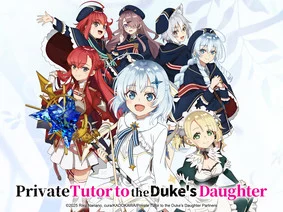
Private Tutor to the Duke’s Daughter (translated title) offers a textbook example of an isekai-adjacent school fantasy that leans heavily into character-driven vignettes. At its core the series follows Allen, a commoner-turned-tutor, as he tries to guide a trio of female magic students—most notably Tina, the duke’s daughter—through personal and magical hurdles. The anime’s strengths lie in sympathetic character moments and approachable moral beats, but its handling of romance, age dynamics, and pacing raise significant concerns that any prospective viewer should weigh before watching.
Table of Contents
Quick Synopsis and Setup
Allen, a skilled yet middling magic user from a common background, once stood to rise through the ranks of the academy. After failing an important exam and finding himself sidelined, he accepts a tutoring position for Tina—an aristocratic student with immense mana but a crippling block that prevents her from controlling magic. The series unfolds largely episodically: Allen meets new students, uncovers emotional obstacles tied to family expectations or identity, and helps them grow through mentorship and teamwork.
Characters and Relationship Dynamics
Allen — the reluctant mentor
Allen functions as the steady center of the show: competent, patient, and willing to take risks for his students. His role as a tutor provides the narrative with a convenient structure to introduce new problems and resolve them within an episode or two.
Tina, Ellie, and Lynne — the problematic trio
The three primary female students share a familiar dynamic: they idolize Allen and each develops an intense crush that fuels both comedy and drama. Tina’s arc—rooted in feelings of inferiority despite great potential—is the longest and most developed, culminating in scenes where her emotional outbursts threaten herself and others and require Allen’s intervention.
Romantic tension and ethical blind spots
The series repeatedly frames these underage crushes as serious romantic competition for Allen’s affection. Tina, Ellie, and Lynne are portrayed as middle-schoolers while Allen is an adult and academy graduate. Story choices—such as physical advances, obsessive behavior, and Allen’s ambiguous encouragement—create an uneasy tone that blurs mentorship and courtship. For many viewers, this is the anime’s main stumbling block: a premise that treats underage attraction as romantic possibility rather than a boundary to be firmly enforced.
Themes: Growth, Expectation, and Class
Beyond the romance controversy, the show tries to tackle relatable themes: the pressure of family expectations, the frustration of not living up to perceived potential, and social discrimination. Instances of class prejudice (Allen’s commoner background) and racial barriers for demi-humans appear in the background and occasionally influence character outcomes, but these threads are often underexplored. The narrative generally prefers personal, episodic resolutions—characters find new paths, redefine goals, or accept themselves—rather than developing broader socio-political commentary.
Visuals and Sound
Dialogue scenes are solidly handled: character models, expressions, and backgrounds are serviceable and do the job for quiet moments of growth. Action sequences, however, suffer uneven animation quality. While the series attempts dynamic magical confrontations, the execution oscillates between ambitious movement and budget-driven shortcuts.
The soundtrack is unobtrusive and functional—rarely memorable, but rarely disruptive. Music supports scenes without calling attention away from character work, which fits the series’ focus on personal development rather than spectacle.
Narrative Structure and Adaptation Choices
The anime’s episodic “meet, reveal, resolve” structure makes it easy to drop into but also limits long-term stakes. Hints of larger plotlines—political jealousy, institutional prejudice, or unresolved tensions between houses—are introduced but often sidelined in service of short-term character resolutions. Given the light novel source material spans many volumes, the adaptation’s narrow focus may disappoint viewers expecting deeper worldbuilding or a more coherent throughline.
Who will enjoy this series?
Viewers who appreciate character-focused, low-stakes fantasy with a gentle moral core will find moments of charm here. The show’s episodic nature makes it cozy and often comforting when it concentrates on personal growth and friendship.
Who should be cautious?
Anyone uncomfortable with romantic framing between adults and underage characters should approach with care. The handling of consent and boundaries—particularly in scenes where minors use manipulation or physicality to influence Allen—will be a dealbreaker for many.
Further reading
For background on the source material or release information, see the series entry on Wikipedia (rel=”nofollow” target=”_blank”>Private Tutor to the Duke’s Daughter — Wikipedia) or viewer reviews and episode guides on MyAnimeList (rel=”nofollow” target=”_blank”>MyAnimeList — Private Tutor to the Duke’s Daughter).
Final thoughts
Private Tutor to the Duke’s Daughter delivers a blend of heartfelt character moments and awkward romantic framing. Its strengths are empathetic resolutions and a dependable lead who helps others confront their fears; its weaknesses are uneven animation and a recurring romantic premise that crosses uncomfortable ethical lines. If you’re drawn to mentor-student dramas and can look past the problematic age dynamic, there are rewarding emotional beats here. If that dynamic concerns you, however, the series may be difficult to enjoy despite its otherwise solid intentions.