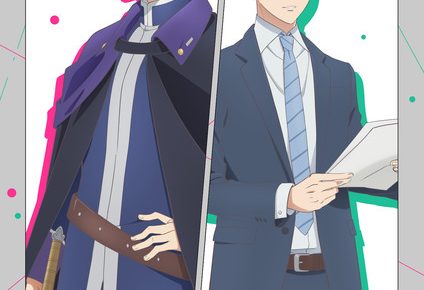
Dead Account episode 3 leans into its exam-arc setup, but struggles to turn premise into satisfying spectacle. The episode tries to balance a training battle, a glimpse into protagonist Soji’s past, and worldbuilding for the Society of Spirit Mediums, yet the result feels uneven: conceptually interesting in places, visually undercooked in others. This review breaks down the episode’s animation, combat choreography, character work, and sound design to explain why this installment leaves more questions than excitement.
Table of Contents
Animation and visual execution: when small details derail immersion

One of the most glaring issues in Dead Account episode 3 is the lack of careful animation direction for ordinary actions. A seemingly trivial example—the pouring of tea—becomes emblematic of the episode’s broader problem: repetitive frame loops and static staging that kill any sense of motion or weight. When an animation team can’t convincingly show the water level rising in a cup, viewers notice because the omission undermines believability. These kinds of details matter; they are what make a scene feel lived-in rather than assembled.
What makes the episode especially frustrating is how these limitations show up during sequences that should be kinetic. An exam arc typically calls for dynamic framing, creative attacks, and quick cuts that highlight both strategy and stakes. Instead, many of the fights reduce to a series of still images and jump cuts, with only the final hit shown clearly. The episode’s lone high-quality moment—an isolated sakuga-style shot—feels tokenistic rather than earned, serving as an accent instead of a foundation.
Combat and concept: creative ideas, sloppy execution
The episode’s central test has Soji face down 100 pseudo-spirits—Yunomi-kuns—spawned by a machine. It’s a good premise for an exam battle: numbers, pacing, and resource-management elements are all built in. Where the concept falters is in execution. Soji’s primary ability manifests as generic blue fire magic with animation that rarely capitalizes on the visual potential of flames. Hits are suggested more than shown, and the choreography never develops into an intelligible rhythm that would let viewers follow and appreciate the techniques being used.
A particularly odd creative choice is making Soji’s power activation tied to his phone battery. The idea of a mundane object powering supernatural abilities has novelty, but the episode treats it like a gag more than a meaningful mechanic. The protagonist literally cues a “cyber out” line during activation—a term that could have been a neat worldbuilding hook if the script had committed to exploring its implications. Instead, it reads like a throwaway moment that underlines the show’s inconsistent tone.
Montage fatigue and missed opportunities
Mid-episode, a montage is used to compress time and skip over tedious sequences. Montages are a valid storytelling tool, but here it functions as an excuse to avoid animating the bulk of the fighting. The montage adds to a sensation of rushed production: instead of designing varied encounters or inventive spell usage, the episode opts to imply progress rather than show it. For an exam arc, where growth and skill application should be front-and-center, this choice feels like a missed opportunity.
Characters and worldbuilding: thin sketches where depth is needed
This episode introduces more members of the Society of Spirit Mediums, but characterization is thin. Visual design attempts to differentiate characters—there’s a livestreaming doll character who appears to be a fan of Soji’s flame videos and likely exists for comic relief—but personalities remain underdeveloped. Naming your organization “Society of Spirit Mediums” instead of simply “exorcists” or something concise doesn’t add gravitas; it feels like a label chosen to sound archetypal rather than to reveal internal culture or stakes.
Soji himself does not gain much depth here. A flashback explains his motivation—financial desperation and the illness of his sister—which reiterates the series’ basic premise without revealing new emotional layers. The scene’s intention is clearly to win sympathy, but because it highlights information we already know, it comes off as redundant rather than revealing. Stronger handling would have tied the flashback to Soji’s present decisions during the exam, making the past actively inform the fight.
Villain reveal: convenience over surprise
The episode reveals the spirit that killed Soji’s sister and ties it to a character, Sad Boy K, who is apparently among the most powerful antagonists so far. The coincidence feels scripted to maximize dramatic stakes rather than emerging organically from earlier storytelling. When a show resorts to this kind of narrative shorthand, it sacrifices nuance for shock, which can rob a reveal of impact.
Sound and music: hints of atmosphere
One consistently effective element in episode 3 is the soundtrack. The score brings texture and helps set an off-kilter tone for scenes that would otherwise fall flat. While music alone can’t rescue clumsy visuals, it does provide a throughline of mood, punctuating tense moments and helping to sell emotional beats. If the production can sustain and better integrate the soundtrack with tighter visuals, the show could turn these auditory strengths into stronger narrative momentum.
Where to stream Dead Account episode 3
If you want to watch the episode yourself, Dead Account is available on streaming platforms. One official option can be found here: Dead Account on Crunchyroll. For readers interested in how animation quality varies between key frames and in-betweens, the concept of sakuga is useful background reading: what sakuga means.
Final thoughts
Dead Account episode 3 contains interesting seeds—an imaginative magic premise, a high-stakes exam setup, and a soundtrack that effectively conveys mood—but it’s repeatedly undercut by rushed or unimaginative animation and by plotting choices that favor convenience over development. The episode could have been a showcase of inventive combat and meaningful character growth; instead, it feels like a series of fragments that hint at potential rather than delivering on it. If future episodes invest more attention in staging fights, committing to character beats, and honoring small, believable details, the show might still find its footing. For now, episode 3 reads as an instalment where concept outpaces craft.
The views expressed here are my own and aim to evaluate the episode’s technical and narrative merits for viewers deciding whether to continue the series.